
Reviewed · CURACAO
Jewish Heritage of Curacao
Curaçao’s Jewish story reaches back to the 1600s, and this tour brings it to life through places you would be unlikely to connect on your own. You’ll visit Beth Haim cemetery, walk through old Scharloo, and enter Mikveh Israel-Emanuel, where the sand-covered floor is one of the island’s most memorable sights.
I like the way the tour mixes major Jewish landmarks with Landhuis Chobolobo, where you learn about a Jewish family connected to Curaçao’s famous liqueur. I also like the easy shared transport, especially for cruise passengers. The main caution is that pickup details and synagogue access have occasionally caused trouble, so confirm the meeting point and schedule before you set out.
Key points at a glance
- A synagogue with a sand floor: Mikveh Israel-Emanuel offers a close look at religious life in Curaçao and a striking interior unlike most synagogues.
- Beth Haim dates to 1659: Weathered stones and old epitaphs make this cemetery a quiet, moving stop.
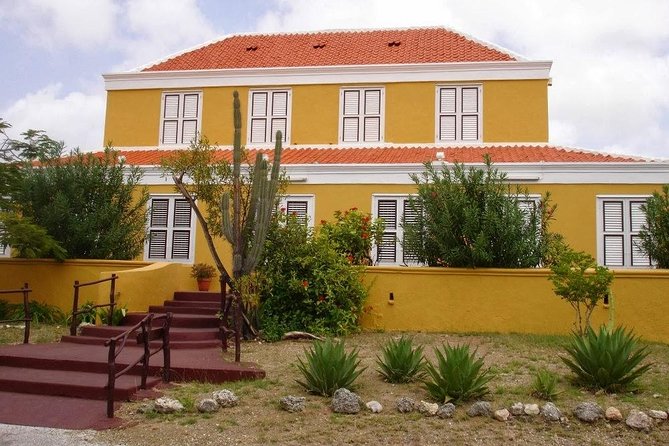
- Chobolobo adds local flavor: Tour the plantation house, hear about its Jewish owners, and sample Curaçao liqueur.
- Scharloo is best seen with context: The colorful old buildings and former slave houses mean more when your guide explains the district’s past.
- Guides can make or break the day: Jude Reyes and Bigala Cecilia received especially warm praise for their clear talks and personal attention.
- Plan around the rules: Bring identification for the synagogue, wear long pants, and avoid swimwear or short pants inside.
Why Curaçao’s Jewish story deserves a half-day
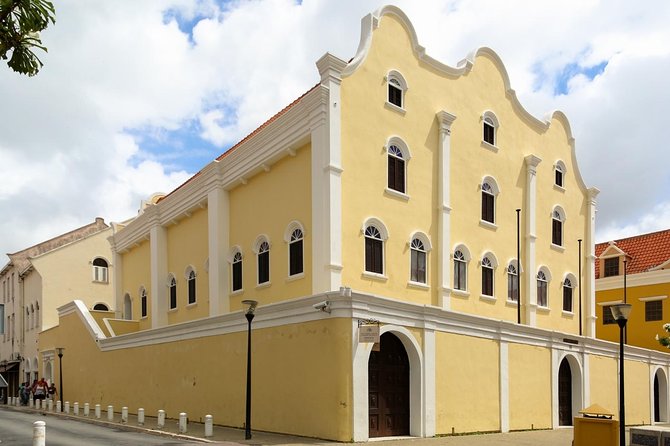
Curaçao is often sold through beaches, colorful waterfront buildings, and easygoing island life. Those are good reasons to visit, but the island also holds one of the Caribbean’s most important Jewish stories. Sephardic Jews arrived in the 1600s, and Jewish life has continued here for centuries.
This tour gives you a structured way to understand that past. Instead of visiting a synagogue as a quick photo stop, you move between a cemetery, an old neighborhood, a plantation house, and a working religious site. Each place shows a different part of the story: settlement, trade, family life, death, worship, and the way Jewish culture became part of Curaçao.
The experience is listed at $155 per person and lasts about three and a half hours, though some groups have spent closer to five hours when extra stops or added time were included. That price is not bargain sightseeing, but it covers round-trip shared transport, a guide, water, admission to the listed sites, and the convenience of linking several scattered places in one morning.
I see the value most clearly if you are on a cruise, staying without a car, or interested in history more than a beach day. A private taxi between the sites could quickly become expensive, while arranging access to the synagogue and cemetery on your own would take extra work. If you only want a brief look at Willemstad, this is probably more history than you need.
More history and heritage in Curacao:
- The Curacao’s Colorful History Walking Tour
★ 5.0 · 55 reviews - Costumizable Private Jewish Heritage Tour Experience
★ 5.0 · 43 reviews - Cultural and Historical Audio guided walking tour Tour of Otrobanda, Willemstad
★ 4.0 · 8 reviews
Landhuis Chobolobo and the family behind Curaçao liqueur
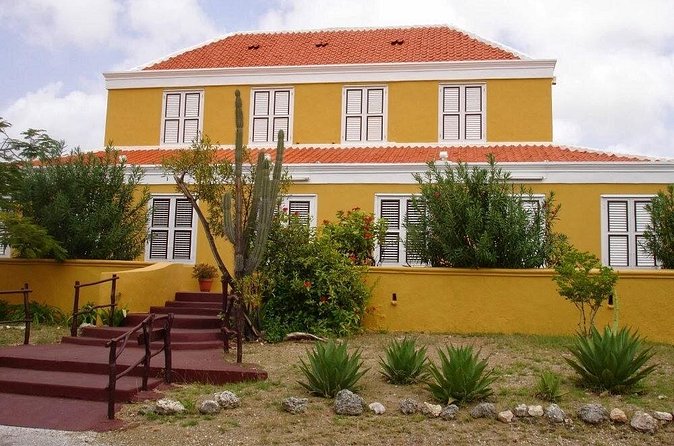
The tour begins at Landhuis Chobolobo, a former plantation house connected to a Jewish family. Today, the site is associated with the production of Curaçao liqueur, so this stop links Jewish business history with a product many visitors recognize from island bars and gift shops.
You’ll tour the house, hear about the family name and its past, and have a chance to sample the local product before leaving. Alcoholic drinks are available to purchase, but the tasting itself is part of the visit. The minimum drinking age is 18.
This is a useful opening stop because it gives the tour a human and economic angle. Jewish history here was not limited to worship. Families worked, traded, built businesses, and helped shape the island’s commercial life. Chobolobo makes that point in a practical way.
Allow about 45 minutes. You do not need to treat the tasting as the main event. The better reason to pay attention is the connection between the house, the family, and the wider story of Jewish settlement in Curaçao. If you do not drink alcohol, the historical portion still gives the stop a purpose.
Beth Haim cemetery, a quiet place dating to 1659
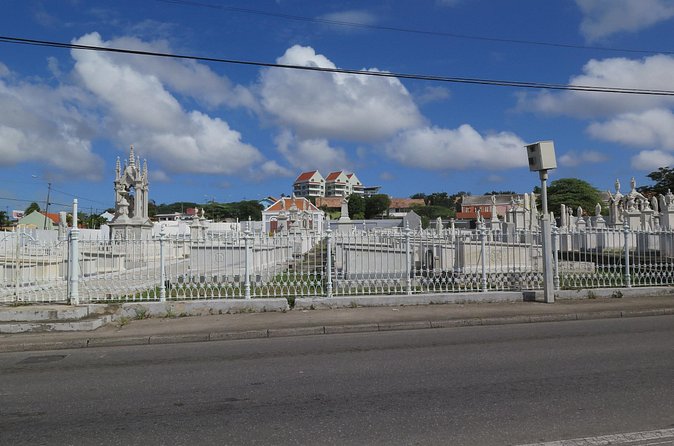
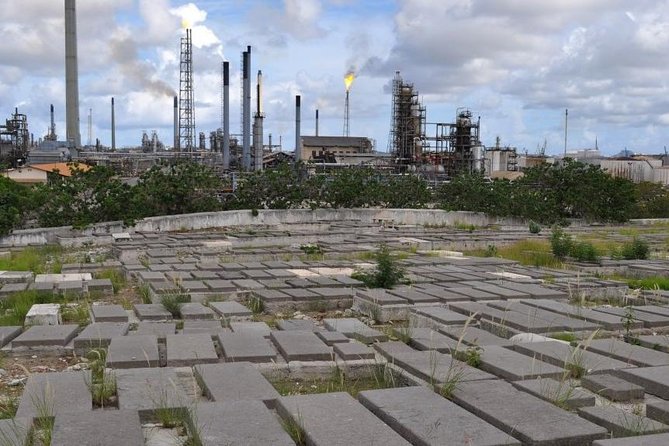
Beth Haim is often the emotional center of the morning. Consecrated in 1659, it is regarded as the oldest Jewish cemetery in the Western Hemisphere and is now a national monument.
Expect a short visit of about 20 minutes. The cemetery contains weathered tombstones with inscriptions that record names, families, and lives from the island’s early Jewish community. The stones are not simply old objects. They offer direct evidence of the people your guide has been discussing.
The stop is quiet and reflective rather than busy or theatrical. Your guide can help explain what you are seeing, since the inscriptions and cemetery customs may not be immediately clear. Take time to look at the stonework and the condition of the markers, but do not expect a long museum visit.
The ground and outdoor setting are another reason to wear sensible shoes. The tour does not require a great deal of walking, but comfortable footwear is still recommended. Bring a hat, sunglasses, and sunscreen, especially if you are visiting during the hotter part of the day.
Scharloo, where the story moves into the city
The drive through Scharloo shows a different side of Curaçao’s Jewish past. This old neighborhood contains colorful buildings and former slave houses, and your guide provides the context that turns a drive into a history lesson.
The scheduled visit is about 20 minutes, so think of Scharloo as a guided overview rather than a long walking tour. You’ll see the district from the vehicle and stop for views and photographs. The colorful facades are attractive, but the important part is understanding how the neighborhood fits into Willemstad’s social and commercial past.
This portion also helps break up the indoor visits. After the cemetery, you return to the city and see how Jewish families lived and worked within a broader Curaçao community. The old buildings give the story a physical setting.
The trade-off is time. Twenty minutes is enough to see and discuss the area, but not enough for a detailed architectural tour. If Scharloo is your main interest, you may want to return independently later. On this tour, it functions as one chapter in a larger story.
Same island, a completely different kind of day:
- Klein Curacao Day Trip with Premium Open Bar and BBQ-Lunch
★ 4.5 · 1,302 reviews - Aquafari Tour in Curaçao
★ 5.0 · 1,240 reviews - Curacao: Swimming with Sea Turtles meets Sea turtle beach
★ 5.0 · 1,058 reviews - Klein Curacao Adventure Day Trip
★ 4.5 · 944 reviews
Mikveh Israel-Emanuel, the tour’s main attraction
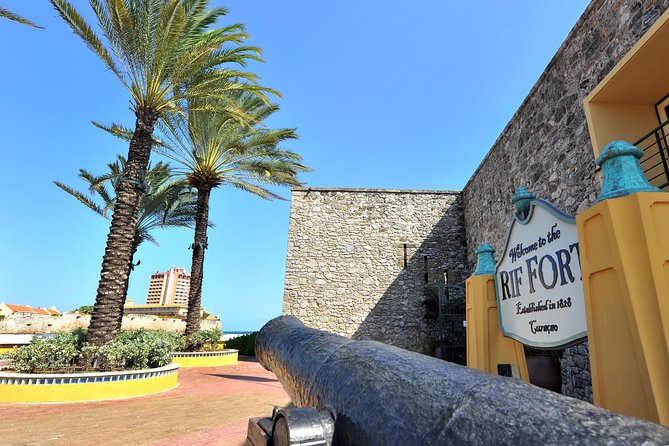
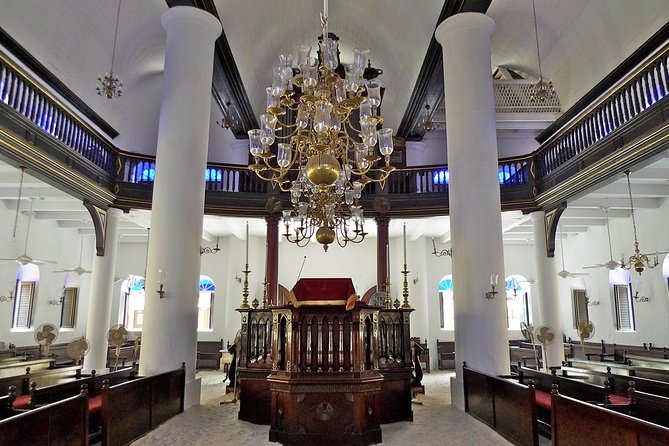
The longest stop is Mikveh Israel-Emanuel Synagogue, with about one hour and 45 minutes set aside for a guided visit. Jewish worship has continued in Curaçao without interruption since 1732, and the congregation itself is older.
The synagogue’s sand floor is the detail most likely to stay with you. It is distinctive, visually striking, and tied to the building’s religious tradition. You’ll also learn about Jewish life in Curaçao and see the sanctuary at close range rather than simply viewing it from outside.
This is where the quality of the guide matters most. Jude Reyes received especially strong praise for his explanations of Jewish history, traditions, and Curaçao’s culture. Bigala Cecilia was also singled out for her detailed talks and ability to answer questions, while other groups had good experiences with guides named Naomi and Ellen. Guide assignments can vary, so do not assume a particular person will lead your departure.
The synagogue is not only a pretty interior. It is a place of worship, so visitors need to behave accordingly. Short pants and swimwear are not allowed, and you must show identification such as a passport or sea card to enter. Long pants or jeans and walking shoes are the safest choice.
There can also be schedule problems. On one occasion, a group found services in progress and could not enter at first. The guide and driver adjusted the plan and added time so the group could still see the promised sites. That kind of flexibility is valuable, but you should still confirm that your visit fits the synagogue’s opening schedule before booking.
What the guide adds to the experience
The tour covers places that are easy to find but harder to understand. A cemetery may look like a collection of old stones. A neighborhood may appear to be a row of colorful buildings. A synagogue may seem like a beautiful room. The guide connects those sights to migration, family names, business, faith, and daily life.
The strongest guide reports focus on clear storytelling and genuine interest. Jude Reyes was described as especially strong on both Jewish history and the broader history of Curaçao. Bigala Cecilia was praised for keeping the group engaged and answering questions. Other positive comments noted guides who were respectful, culturally aware, and willing to add an extra stop or spend more time when needed.
The experience is not perfectly consistent. Some groups found the guide’s knowledge too limited, or felt that prepared talks left little room for questions. One visitor also found the guide focused too much on directing the driver. That is a fair concern on a history tour, since the conversation should be about the places and people, not just the route.
Ask questions when the timing allows, particularly at the synagogue and cemetery. A small group can make that easier. The vehicle may hold around ten people, though the official maximum is much higher at 100, so group size can vary.
Pickup, timing, and the details that matter
The tour starts at 9 a.m. and returns to the meeting point in Willemstad. Hotel pickup and drop-off are offered, as are port transfers, but pickup is not available from Sandals Hotel, Jan Thiel, or the Banda Abou area. Check this before paying, since an included transfer is not useful if your accommodation falls outside the service area.
Cruise passengers need to provide the ship name, docking time, disembarkation time, and re-boarding time when booking. That information helps the operator judge whether the morning schedule works. You should also leave a sensible buffer before your ship’s all-aboard time, especially if pickup instructions change.
Communication has been the weak point for some departures. Meeting locations have changed at the last minute, and at least one tour was canceled without notice until the group arrived. Those problems were not the norm, but they matter greatly when you have only one day in port. Confirm the pickup place and start time shortly before the tour.
Round-trip shared transport keeps the outing simple, though it also means you do not control every departure time. Bottled water is included, and the vehicle is air-conditioned according to one detailed account. Most people can participate, and the tour involves limited walking, but mobility needs should be discussed in advance because no special accessibility arrangements are stated.
Is $155 a fair price?
At $155, this is a mid-priced cultural excursion rather than a casual city drive. You are paying for transport between several locations, entry to the plantation house, cemetery, and synagogue, bottled water, and a guide who can explain the historical links between them.
The value improves if you are arriving by cruise ship or do not have a rental car. You avoid arranging several rides and gain access to a subject that is not usually part of a standard beach or city highlights tour. The synagogue visit alone would not justify the price for everyone, but the cemetery, Scharloo, and Chobolobo make the morning more substantial.
The value drops if you are mainly looking for free sightseeing or if you already know the Jewish sites well. You should also remember that the tour is shared, so the amount of personal attention depends on the group and guide. The published duration is about three and a half hours, but the actual day can run longer when extra stops or schedule adjustments are added.
Free cancellation is available if you cancel at least 24 hours before the start time. A minimum of two people is required, and if the operator cancels because that minimum is not met, you should be offered another date or a full refund.
Who should book this Curaçao tour?
I would choose this experience if you want a focused look at Curaçao beyond the usual waterfront photographs. It suits Jewish visitors, people interested in migration and religious history, and anyone who enjoys seeing how a community shaped an island over several centuries.
It also works well for a mixed group. One person can come for the synagogue while another comes for architecture, plantation history, or Curaçao’s wider past. The tour does not assume that everyone in the group is Jewish, and the historical material gives non-Jewish visitors plenty to follow.
I would hesitate if your schedule is tight, your accommodation is outside the pickup area, or you cannot dress appropriately for the synagogue. I would also confirm the meeting details directly before departure, particularly if you are on a cruise and missing the tour would spoil your only day in Curaçao.
Should you book the Jewish Heritage of Curaçao tour?
Book it if you want a serious, well-organized introduction to Curaçao’s Jewish past and prefer having transport and explanations handled for you. The sand-floored synagogue, Beth Haim cemetery, and Chobolobo plantation house give the morning real variety.
Go in with practical expectations. Guide quality can vary, communication has sometimes been shaky, and Scharloo is a short drive-through rather than a full neighborhood walk. Still, with a strong guide such as Jude Reyes or Bigala Cecilia, the tour can turn a few historic sites into a clear and moving portrait of Curaçao’s Jewish community.
FAQ
How long does the Jewish Heritage of Curaçao tour last?
The advertised duration is approximately three hours and 30 minutes. Some departures have lasted closer to five hours when extra stops or additional time were added.
What sites are included?
The tour includes Landhuis Chobolobo, Beth Haim Jewish cemetery, a drive through Scharloo, and Mikveh Israel-Emanuel Synagogue. Admission is included for the listed ticketed stops.
Is hotel or cruise port pickup available?
Yes. Hotel pickup, hotel drop-off, port pickup, and port drop-off are offered, along with transport between the sights. Pickup is not available from Sandals Hotel, Jan Thiel, or the Banda Abou area.
What should I wear to the synagogue?
Long pants or jeans and walking shoes are recommended. Short pants and swimwear are not permitted inside the synagogue. A hat, sunglasses, and sunscreen are also recommended for the outdoor portions.
Do I need identification to enter the synagogue?
Yes. You must present identification, such as a passport or sea card, to enter the synagogue.
Can I cancel for a refund?
You can cancel for a full refund up to 24 hours before the experience starts. Changes or cancellations made less than 24 hours before the start time are not accepted for a refund.
Just added around Curacao
- Blue Curacao Factory and City Tour★ 5.0 · 3 reviews
- Vibrant City Tour by Night: The perfect night out when in Curacao★ 4.0 · 8 reviews
- Curacao Sea Turtle Swim and West Side Natural Highlights★ 4.5 · 10 reviews
- Curacao Sea Trek Snuba Combo Walk Tour and Dive the Ocean★ 5.0 · 4 reviews
- Sunset Sip and Paint Overlooking Curaçao Iconic Skyline★ 5.0 · 4 reviews
- The Lemon Beach Adults Only Relaxation by the Sea★ 3.5 · 3 reviews
- Ultimate Full-Day Private Tour: Discover all Curacao highlights★ 5.0 · 8 reviews
- Sunset Boat Trip in the Spanish water and coastline of Curacao★ 4.5 · 8 reviews