
Reviewed · CURACAO
A little Taste of Kiteboarding
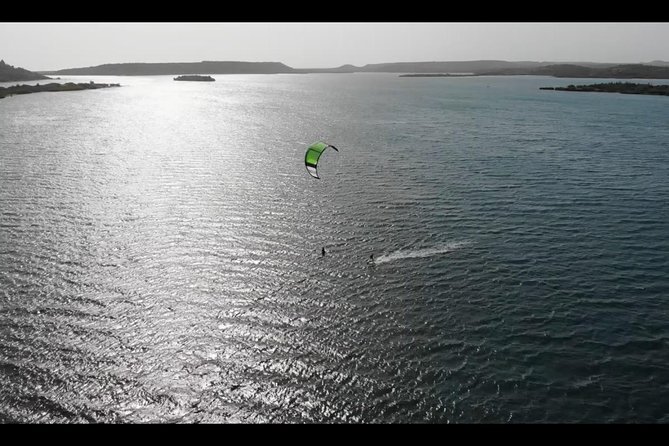
St. Joris Bay gives you a useful first taste of kiteboarding because its water shifts from shallow to deep. You can learn the kite itself in a controlled area, then feel how wind power moves you across the water. The focus is technique and safety, not simply a quick thrill.
I like the private instruction, since your coach can adjust the lesson to your pace. I also like that the school supplies the main gear, water shoes, a rash guard, and an intercom radio. The practical drawback is that two hours is enough for an introduction, not mastery, and you must be comfortable in the water.
Key points to know
- St. Joris Bay offers varied water depth: Shallow sections help with early practice, while deeper water lets you work on movement and control.
- The lesson begins with safety: You’ll set up the kite, review wind conditions, and learn how to handle the equipment before entering the water.
- Your instructor stays connected: An intercom radio lets you receive guidance while you practice.
- The gear is largely supplied: Kite equipment, water shoes, rash guards, and sunscreen are provided, though bringing your own sunscreen is still sensible.
- The activity is private: Only your group participates, which gives the lesson a more personal feel.
- You need moderate fitness and swimming ability: This is not a good choice if you cannot swim.
Why St. Joris Bay works for a first lesson
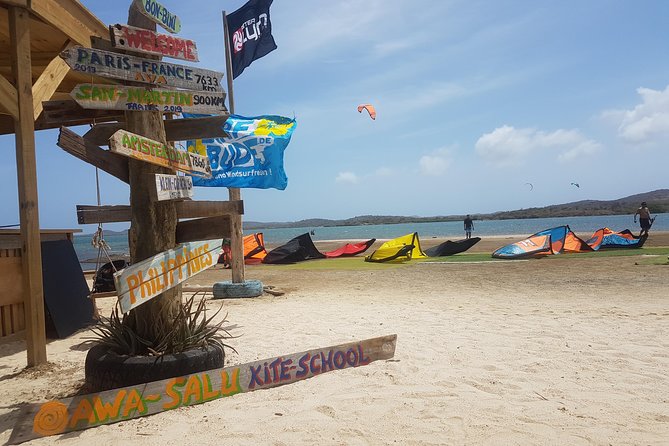
Kiteboarding can look simple from shore: a board, a kite, and a steady breeze. In practice, the kite is the machine that powers everything, and controlling it takes attention. This introduction wisely begins with kite handling rather than rushing you straight onto the board.
St. Joris Bay is a strong setting for that first step. The water is shallow in some places and deeper in others, so the lesson can cover more than one part of the sport. Shallow water gives you room to get comfortable with steering. Deeper sections let you feel the pull of the wind and practice how the kite moves you.
The bay is also a scenic place to spend part of your Curaçao day. You are not sitting in a classroom watching a demonstration. You are outdoors, reading the wind, handling the lines, and working with your instructor in the same setting where local kiteboarders practice.
That setting matters. Kiteboarding depends on conditions, body position, and timing. A lesson at the actual riding spot helps you understand how those pieces fit together better than a short equipment demonstration on dry land.
Other Curacao days people book alongside this one:
- Klein Curacao Day Trip with Premium Open Bar and BBQ-Lunch
★ 4.5 · 1,302 reviews - Aquafari Tour in Curaçao
★ 5.0 · 1,240 reviews - Curacao: Swimming with Sea Turtles meets Sea turtle beach
★ 5.0 · 1,058 reviews
The first minutes: setup, wind, and safety
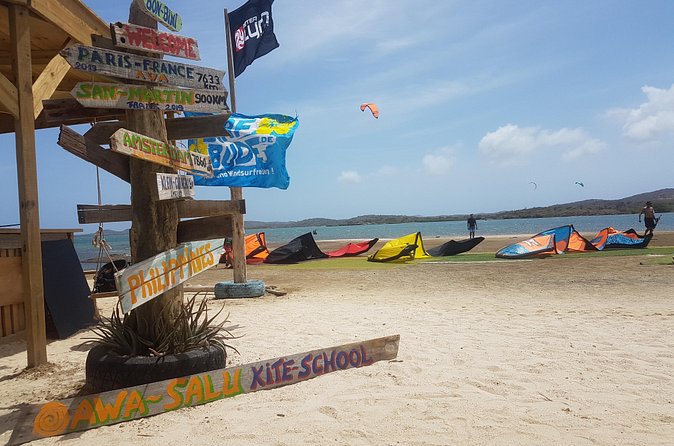
Your lesson begins at Awa Salu Kiteboarding Curaçao, at The Spot on the way to St. Joris Bay. Allow the opening section to feel deliberate. The instructor must prepare the kite and explain how wind and safety affect every move you make.
You’ll learn how to handle the kite before you are expected to control your body on the water. That order is important. If the kite pulls unexpectedly, your first response should be calm and practiced, not improvised.
The wind briefing also gives you a basic sense of what makes kiteboarding different from ordinary board sports. You are not powered by a motor or paddle. You are working with the wind, using the kite to create movement and adjusting its direction with the control bar.
The included intercom radio is a practical touch. Your instructor can give you guidance while you are away from shore or focused on the kite. Beginners often have too much to watch at once, so clear instructions in the moment can help you make corrections without constantly returning to shore.
This portion may feel less exciting than getting on the board, but it is where the lesson earns its value. A safe introduction should give you control over the equipment before it gives you speed.
Entering the water and learning the kite
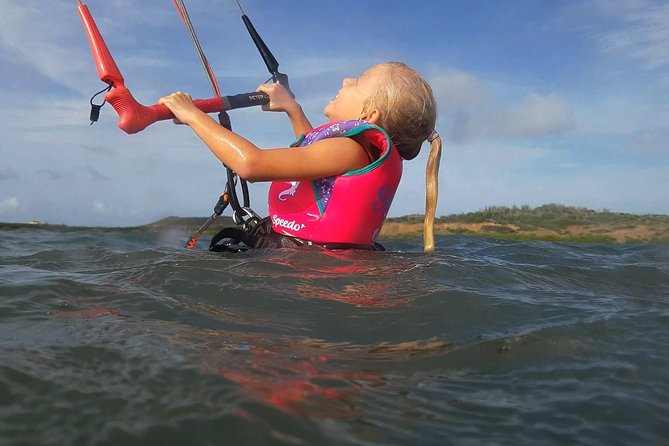
After the briefing, you and your instructor go into the water. The first goal is steering the kite, not setting a personal speed record.
You’ll practice directing the kite and learning how small changes affect its pull. The instructor will help you understand how to position it so the wind can propel you. The experience description makes clear that the emphasis is on moving with wind power, using the kite rather than relying on a motor or other equipment.
The shallow sections of St. Joris Bay are useful here. You can concentrate on the kite while standing or working in manageable water. That reduces the number of problems you must solve at once.
As your control improves, the deeper sections can introduce another part of the sport. You begin to feel how the kite pulls your body and how water depth changes the way you move. This is where the lesson can shift from basic equipment handling toward the sensation that makes kiteboarding so appealing.
Expect to make mistakes. One person who took the lesson got onto the board on the first day but also swallowed plenty of salt water. That is a good reminder to keep your expectations sensible. A quick learner may stand on the board, but even a successful first session can be wet, tiring, and untidy.
The instructor’s job is to help you progress without turning every mistake into a problem. If Lara is leading your lesson, she has been singled out for creating an encouraging birthday experience and helping a first-timer get moving quickly. Still, your result will depend on wind, fitness, comfort in the water, and how quickly you pick up the kite controls.
What the supplied equipment means for you
The price includes the current kite gear used by the school, so you do not need to arrive with specialist equipment. That is a real benefit for a beginner. Buying or transporting kiteboarding gear for one short lesson would make little sense.
Water shoes are included as well. They can make the move from shore to water more comfortable and give you useful protection while you work in shallow areas. A rash guard is supplied, which adds coverage during an active session in the sun.
Sunscreen is listed among the included items, but you are also told to bring water and sunscreen. I would bring your own sunscreen anyway, especially if you have a preferred brand or need a formula that suits your skin. Bring swimwear and a bottle of water, and leave valuables at home.
The packing list is short because the school handles the bulky parts. You should arrive ready to get wet and move around, not dressed for a casual beach stop. Your swimwear needs to be suitable for active water work.
Same island, a completely different kind of day:
- Klein Curacao Adventure Day Trip
★ 4.5 · 944 reviews - Discover Diving in Curacao
★ 5.0 · 886 reviews - Curacao Helmet Diving-Walk the Ocean Floor, No Swimming Required
★ 5.0 · 761 reviews - All West Beach Hopping Tour
★ 5.0 · 594 reviews
The private format and the role of the instructor
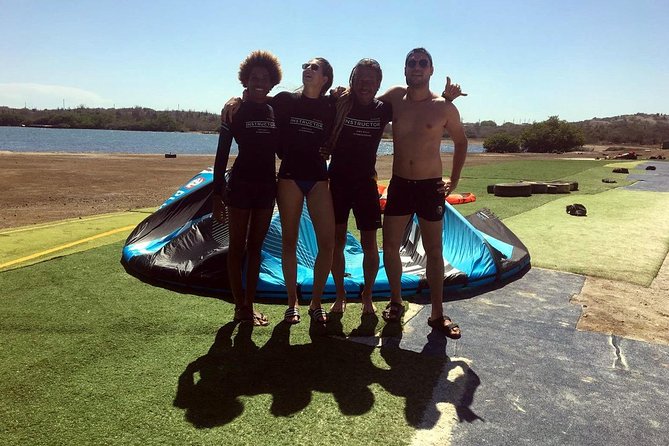
This is a private activity, meaning only your group participates. That makes the lesson easier to tailor than a large class. If you learn quickly, your instructor can spend more time on water movement. If you need longer with the kite, you are not being rushed to match a whole group.
Private instruction is especially useful in a sport where the first few minutes can reveal very different comfort levels. One person may pick up steering fast, while another needs more practice before allowing the kite to pull harder. The one-to-one or small-group feel lets the lesson respond to those differences.
The two-way communication also helps. With the intercom radio, you can receive corrections while practicing instead of guessing what to change. That is valuable when your attention is split between the kite, the water, and your own body position.
Lara is the coach name connected with the most enthusiastic account of this experience. She may not be the instructor on every date, so do not book on the assumption that she will lead your session. The important point is that the school’s format gives the instructor room to coach actively rather than simply hand over equipment.
Watching local riders before and after your lesson
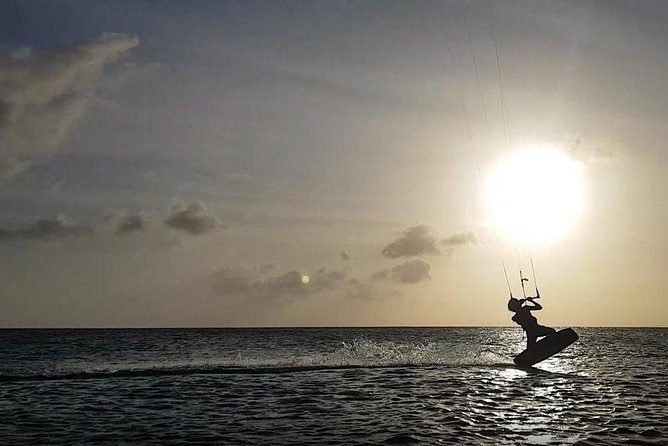
Before and after the lesson, you can watch local kiteboarders using the bay. This is more than scenery. It gives you a chance to see how the equipment looks when handled by people with control and experience.
Before you begin, watching the riders may help you connect the safety briefing with the real sport. Afterward, you can better recognize the difference between basic kite control and the more advanced tricks performed by local riders.
The timing also gives you a natural pause around the two-hour lesson. You can observe without needing to participate, ask about what you saw, and let your body settle after the water work. Since the activity ends back at the meeting point, you do not need to arrange a separate finish location.
The local riding adds character to the outing. You are not only completing a packaged lesson and leaving. You are spending time at the bay where kiteboarding is part of the local outdoor scene.
Is $195 a fair price?
At $195 per person, this is not a cheap beach activity. The value comes from the private format, the instructor’s attention, and the equipment package rather than from the length alone.
Two hours is a short introduction, but kiteboarding requires specialist gear and careful supervision. The price covers the kite equipment, water shoes, rash guard, intercom radio, and the teaching time. Return transport from your accommodation is also available, which may add convenience, though the supplied details do not state whether transport costs extra.
I would judge the price by your goal. If you want to test kiteboarding before committing to a longer course, the lesson has a clear purpose. You can learn whether you enjoy the kite control, the physical work, and the sensation of being pulled by wind power.
If you already kiteboard confidently, this introduction will probably offer too little time and too basic a focus. The experience is aimed at beginners and people who want to learn the foundations. More advanced courses are available for practicing skills such as walking with the kite, launching, and landing on land.
The private setting improves the value, especially if you are traveling with a partner or small group and want focused teaching. A large class might cost less, but it could also mean less time with the kite in your hands.
Who should book this Curaçao lesson?
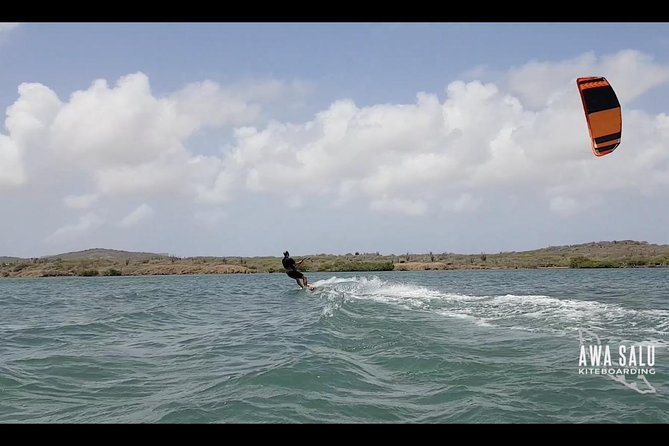
I would choose this for an active first-timer who wants more than a passive beach outing. You should have a moderate level of physical fitness and be able to swim. You do not need to arrive as an athlete, but you should be ready for repeated practice in the water.
It also suits someone who wants to sample a new sport without purchasing equipment or committing to a long course. The lesson gives you a useful first look at the sport’s central skill, kite control, before you decide if more training is right for you.
This is less suitable if you dislike getting wet, want a relaxed sightseeing trip, or need a guaranteed board ride during the first session. The lesson is built around learning the kite, and your progress on the board may vary.
I would also think about the rest of your day. Two hours in the sun and water can be tiring, even if the session feels manageable at first. Bring water, use sunscreen, and avoid carrying valuables to the meeting point.
Booking, weather, and timing details
The activity is usually booked about 60 days ahead, so it is sensible to reserve early if your Curaçao dates are fixed. Confirmation is sent within 48 hours of booking, subject to availability.
Weather matters here in a direct way. Kiteboarding depends on suitable conditions, and poor weather can cancel the session. In that case, you are offered another date or a full refund.
The same applies if the minimum number required for the activity is not met. You can choose a different date or experience, or receive a full refund. Normal cancellation is free up to 24 hours before the start time. Cancellations or changes made less than 24 hours ahead are not refunded or accepted.
Return transport from your accommodation is available, but the listed meeting point is Awa Salu Kiteboarding Curaçao at The Spot, St. Joris Bay. Confirm the pickup details when you book rather than assuming the vehicle will collect you automatically.
My call: book it if you want a real first taste
Book this lesson if you want a focused, private introduction to kiteboarding in a scenic Curaçao setting. The varied water depth, included gear, radio guidance, and safety-first opening make it a sensible way to find out if the sport suits you.
I would not book it expecting a polished two-hour route to expert riding. You may get on the board quickly, as one first-timer did with Lara, but you may also spend much of the lesson steering, correcting, and swallowing a little salt water.
For an active beginner who can swim, $195 buys more than equipment rental. It buys a guided first step into a sport that takes real practice. If that sounds like the right kind of holiday challenge, St. Joris Bay is a good place to begin.
FAQ
How long does the kiteboarding lesson last?
The introduction course lasts approximately two hours.
Where does the activity start?
It starts at Awa Salu Kiteboarding Curaçao, Kite School and Shop, at The Spot on the way to St. Joris Bay in Willemstad, Curaçao.
Where does the activity end?
The activity ends back at the meeting point.
Is the activity private?
Yes. Only your group participates in this activity.
What equipment is included?
The experience includes the current year’s kite gear, an intercom radio, water shoes, rash guards, and sunscreen.
What should I bring?
Bring swimwear, water, and sunscreen. You should leave valuables at home.
Do I need to know how to swim?
Yes. The activity is not recommended for anyone who cannot swim.
What level of fitness do I need?
You should have a moderate level of physical fitness.
Is transportation from my accommodation available?
Return transport from your accommodation is available. Confirm the pickup details when booking.
Can I cancel for a full refund?
Yes, if you cancel at least 24 hours before the experience start time. Poor weather or failure to meet the minimum number of participants can also lead to a different date or a full refund.
Just added around Curacao
- Blue Curacao Factory and City Tour★ 5.0 · 3 reviews
- Vibrant City Tour by Night: The perfect night out when in Curacao★ 4.0 · 8 reviews
- Curacao Sea Turtle Swim and West Side Natural Highlights★ 4.5 · 10 reviews
- Curacao Sea Trek Snuba Combo Walk Tour and Dive the Ocean★ 5.0 · 4 reviews
- Sunset Sip and Paint Overlooking Curaçao Iconic Skyline★ 5.0 · 4 reviews
- The Lemon Beach Adults Only Relaxation by the Sea★ 3.5 · 3 reviews
- Ultimate Full-Day Private Tour: Discover all Curacao highlights★ 5.0 · 8 reviews
- Sunset Boat Trip in the Spanish water and coastline of Curacao★ 4.5 · 8 reviews